All Policy News
All News

U.S. President Donald Trump’s restrictions on foreign nationals’ stays have hit a roadblock. As the Trump administration intensified pressure on foreign visa holders, drawing mounting opposition from various sectors and the opposition party, a court ruled that the necessity and justification for the restrictions had not been sufficiently demonstrated. Experts expect such clashes to become more frequent. With Democrats having captured both the Senate and the House in the midterm elections, they say scrutiny is likely to intensify not only over immigration policy but also over trade, fiscal policy, and foreign affairs and national security.
Read More
German defense contractor Rheinmetall, flooded with orders as Europe rearms, is repeatedly struggling to meet delivery deadlines. In Romania, anti-aircraft guns it was contracted to upgrade failed military acceptance tests, and the company also missed its promised deadline for remedial work, prompting the Defense Ministry to demand delay penalties. Artillery shells were not delivered on time even after production was completed because inspections ran late, while development delays meant that prototype armored engineering vehicles for the German military were delivered only in the year that series production was supposed to begin. With output at a new shell factory ramping up more slowly than initially expected and securing raw materials for propellant charges also taking time, expanding overseas production sites is unlikely to make it easy to clear the order backlog in the near term.
Read More
The delivery target for South Korea’s KF-21 Boramae supersonic fighter in the first quarter of next year has been reduced. Delays in obtaining critical engine components from the United States have disrupted the mass-production schedule. Market observers are concerned that the KF-21’s heavy dependence on foreign components is constraining not only its price and performance competitiveness but also its supply stability and export prospects. They say South Korea’s defense industry needs to move beyond its existing focus on exporting finished products and place greater emphasis on supply-chain self-reliance and localization capabilities.
Read More
The United States and Iran have again exchanged military strikes in the Persian Gulf and around the Strait of Hormuz. After Iran launched a drone attack targeting a U.S. military base, the United States struck Iranian military facilities on Qeshm Island, continuing a pattern of limited clashes. With negotiations to end the war long stalled, international observers increasingly expect the two countries to continue localized military clashes amid a diplomatic deadlock for the time being. Conditions for negotiations have deteriorated as hard-line positions toward the United States, and even calls for nuclear armament, have gained traction within Iran following the U.S. Republican Party’s midterm election defeat.
Read More
The United States has raised “reshaping the security order across Europe” as an agenda item in talks to end the war in Ukraine. This signals the possibility of negotiations extending beyond Ukraine to cover NATO’s military deployments in Eastern Europe and security relations with Russia. European countries have strongly objected, warning that matters directly affecting their own security could be discussed primarily between Washington and Moscow. They argue that, with Russian military threats continuing in the Baltic Sea and elsewhere, it is inappropriate to build a new security framework around the demands of Russia, which has undermined the existing security order.
Read More
Hanwha Aerospace is accelerating its push into Saudi Arabia’s defense market. By pursuing large-scale exports of ground weapons, including self-propelled howitzers and armored vehicles, as well as local production, the company is building a foundation for long-term industrial cooperation. Other major South Korean defense companies, including LIG Nex1 and Korea Aerospace Industries (KAI), are also expanding package deals combining local production, technology transfers, and maintenance and support, particularly in the United Arab Emirates (UAE) and Iraq.
Read More
US President Donald Trump's administration is pursuing restrictions on imports of key Chinese-made data center equipment. With Chinese companies controlling a substantial share of the global optical transceiver market, national security concerns have grown that Chinese-made equipment could be exploited as a conduit for cyberattacks, including data theft and malware distribution. The European Union (EU) is also stepping up efforts to counter China's role in digital infrastructure by reducing dependence on high-risk suppliers such as Huawei and ZTE and tightening security rules across information and communications technology (ICT) supply chains.
Read More
The Japanese government is pursuing a plan to channel public funds into private bank lending to expand investment in strategic industries. With corporate bankruptcies and rising interest rates weakening the private sector’s capacity to invest, the government intends to provide loan funding while also sharing the risk of losses. The plan also has a strong bank-support element, as it would provide funding and revenue sources to regional banks facing higher deposit acquisition costs and shrinking local lending markets. However, if the support is used to keep troubled companies afloat, investment could recover more slowly while the fiscal burden of covering debts that companies cannot repay continues to grow.
Read More
High-level delegations from Saudi Arabia, Pakistan and Türkiye visited Iran for talks aimed at easing regional military tensions. The move reflects a growing need for their own mediation efforts as concerns mount over renewed armed conflict between the United States and Israel on one side and Iran on the other, compounded by attacks on Saudi Arabia by Yemen’s Iran-aligned Houthi armed group. Saudi Arabia, Türkiye and Pakistan, which joined the talks, recently signed a trilateral joint defense agreement and have begun strengthening an independent security cooperation network.
Read More
Investment from global technology companies is pouring into Malaysia. Factors lowering barriers to entry for foreign companies include electricity costs below those in neighboring Singapore, a large English-speaking workforce, and favorable conditions for securing large sites. The Malaysian government is also stepping up efforts to attract global investment in artificial intelligence (AI) and data centers by offering corporate tax breaks and tax incentives for skilled professionals, particularly in special economic zones.
Read More
China steps up vigilance against overseas technology leaks as advanced industries grow
Controls expand from trade and investment sanctions to overseas travel restrictions
 Read More

Trade tensions between the European Union (EU) and China are intensifying as France and Germany, the bloc’s two central powers, pursue sweeping trade sanctions targeting China’s unfair trade practices and supply-chain distortions. Faced with a widening trade deficit and manufacturing weakness, the EU is increasing pressure through proposed import volume restrictions and calls for neighboring trading partners to coordinate their policies toward China. For China, which has expanded into other markets to circumvent U.S. tariff barriers, a contraction in access to Europe would make further export losses difficult to avoid. Rising import restrictions in emerging economies and weak domestic demand also leave limited scope to redirect goods shut out of Europe to other markets.
Read More
Europe has raised the prospect of direct negotiations with Russia. As the prolonged war in Ukraine adds to the burden of military and financial assistance, even the United States has left open the possibility of easing sanctions on Russia and pursuing postwar economic cooperation, signaling a shift in Europe’s approach as well. Experts suggest that Russia, weighed down by economic pressures including slowing growth, a widening fiscal deficit and falling energy tax revenues, may also seek a way forward by resuming dialogue with the West.
Read More
The United States and Japan have agreed to establish a final assembly and testing facility in Japan for the AIM-120 AMRAAM, a leading air-to-air missile used by their fighter jets. Amid rising tensions over the Taiwan Strait and the East China Sea, the two countries are drawing on Japan’s industrial base to strengthen weapons production and supply capabilities in the Indo-Pacific. They are also expanding cooperation beyond AMRAAM to include SM-3 and PAC-3 MSE missiles and drones, bolstering their ability to sustain prolonged operations and their defense capabilities in a contingency.
Read More
U.S. intelligence authorities have warned of China's expanding military capabilities in space. As China rapidly increases its intelligence, surveillance and reconnaissance (ISR) satellites and accelerates the development of ground- and space-based weapons systems, military competition between the United States and China in space is intensifying. Facing China's efforts to counter it, the United States is also turning to private space companies such as SpaceX to expand low-Earth-orbit reconnaissance satellite networks and missile detection networks, while increasing investment in lunar exploration and deep-space technologies.
Read More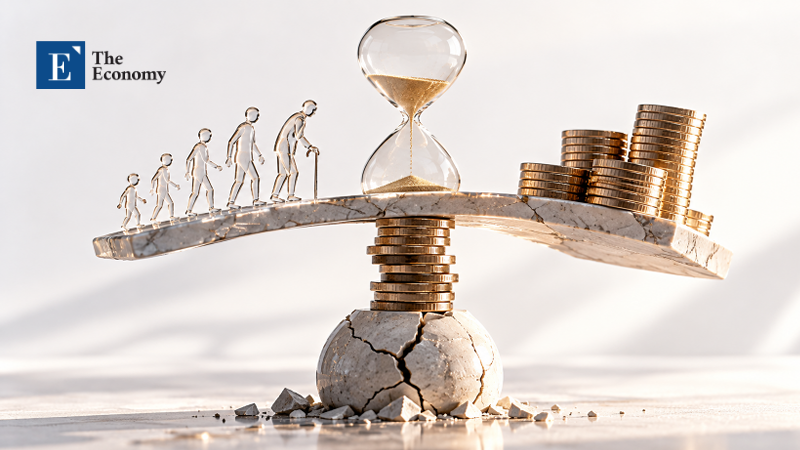
Pension systems worldwide are facing structural financial pressure. As the economically active population paying contributions shrinks and rising life expectancy extends pension payment periods, intergenerational conflicts over adjustments to benefits and contributions are intensifying. Experts say systems need to become more sustainable by linking individuals’ lifetime contributions more closely to the benefits they actually receive, while also incorporating funded savings and investment management.
Read More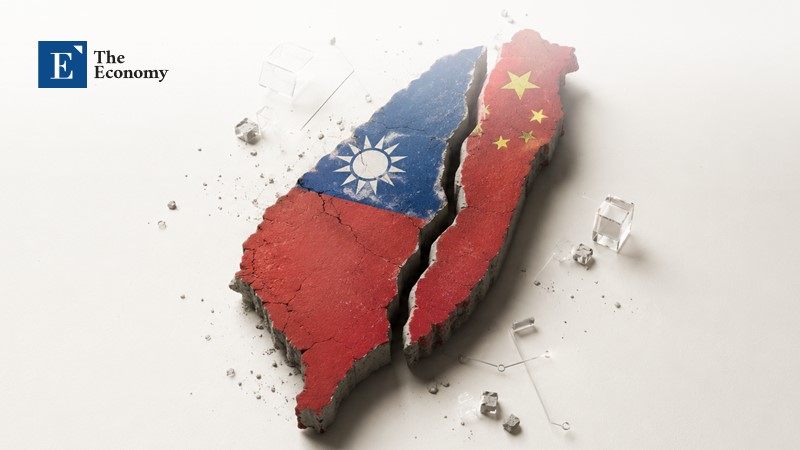
Chinese President Xi Jinping has ordered the military to complete preparations by 2027 to seize Taiwan by force if necessary, but the likelihood of a Chinese invasion before 2028 is increasingly seen as receding. That assessment reflects gaps in the chain of command caused by successive purges of senior military leaders, alongside insufficient transport and logistics capacity to land a large force and sustain an occupation. Some analysts also argue that Xi has chosen a long-term strategy of tightening his control over the military while maintaining pressure on Taiwan. With Taiwan’s presidential election and the U.S. presidential election both scheduled for 2028, there is also speculation that Beijing could assess cross-strait relations and Washington’s willingness to intervene before deciding whether to use force.
Read More
Chinese manufacturers’ efforts to relocate production to Southeast Asia have encountered setbacks. The United States’ partial withdrawal of additional tariffs on low-cost Chinese consumer goods has reduced the benefits of rerouting exports, while shortcomings in local manufacturing conditions have become increasingly apparent, including △shortages of skilled workers △underdeveloped component and materials supply chains △inadequate power infrastructure. As Chinese companies begin moving production back to the mainland, market observers increasingly expect the direction of global diversification away from China to depend on the steps taken by Southeast Asia’s leading manufacturing hubs.
Read More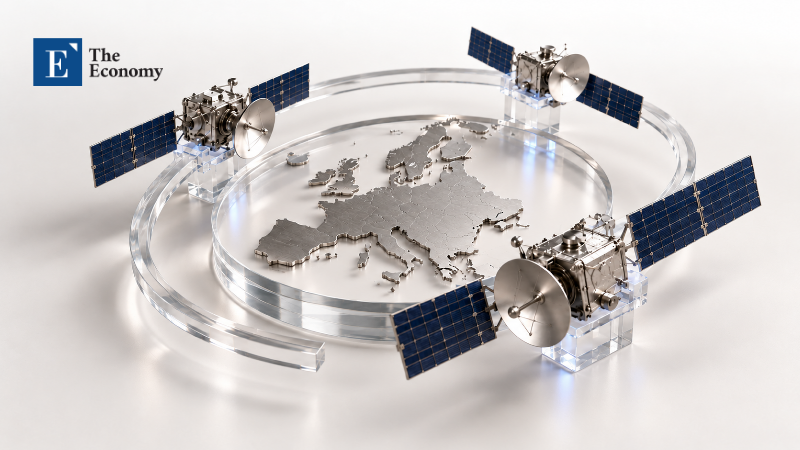
The European Union (EU) is strengthening its independent space capabilities, from securing military space surveillance information to building satellite communications networks and expanding launch capacity. Shifts in U.S. policy have heightened uncertainty over space cooperation, while Russia’s nuclear threats have reinforced the need for Europe to operate its own surveillance and communications networks in a crisis. To ease the substantial costs of development and narrow technological disparities among member states, 15 countries have agreed to procure space surveillance information jointly, while work is also underway on an EU-wide secure satellite communications network. As concerns over duplicative national investment emerge, the EU is also funding joint development projects to consolidate member states’ defense capabilities.
Read More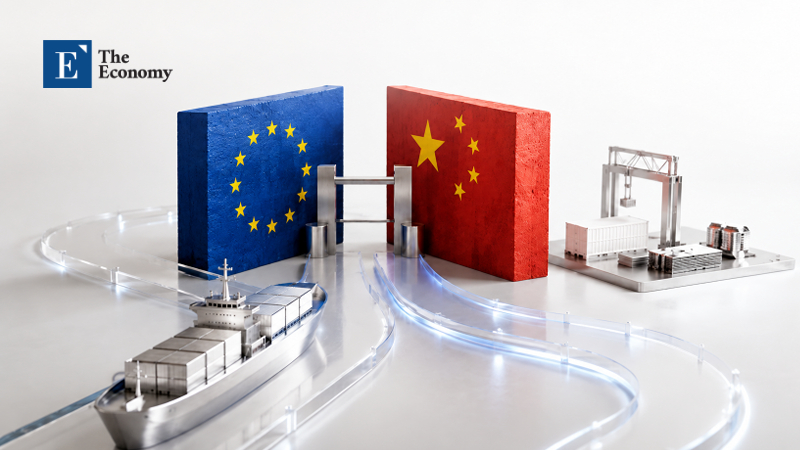
China has launched an anti-dumping investigation into chemicals imported from the European Union (EU). The move follows a series of recent EU trade remedy actions against Chinese chemicals, prompting Beijing to respond in kind. Market observers expect the trade dispute between the two sides could become structurally entrenched and protracted. China’s growing dependence on exports is colliding directly with mounting European concerns over its trade deficit with China and weakening manufacturing competitiveness.
Read More