All Policy News
All News

The United States has renewed pressure on Europe to assume greater responsibility for its defense as it considers redeploying some U.S. forces stationed on the continent to the American homeland and Latin America. The proposal envisages European allies taking the lead in deterring Russia while Washington concentrates its military resources on homeland defense and countering China. Europe, which has been preparing for a reduced U.S. security role, is now focusing on strengthening its ability to respond in combat, building on increases in defense spending and joint arms procurement. Amid concerns over localized Russian provocations, the North Atlantic Treaty Organization (NATO) is refining defense strategies incorporating drones and artificial intelligence (AI), while Estonia is moving its main forces closer to the border to halt an enemy advance from the outset of an invasion.
Read More
The United States is expanding arms sales to Middle Eastern countries. As the prolonged war with Iran heightens regional insecurity, Washington is supplying a succession of U.S.-made air defense, missile and precision-strike systems to partners including Saudi Arabia, the United Arab Emirates (UAE), Kuwait and Qatar. Experts expect these transactions to shift security costs and operational burdens onto partner countries while strengthening the production base of the U.S. defense industry.
Read More
Cooperation among the military services to supply fuel and materiel to deployed aircraft is also taking more concrete form. Exercise Kodiak Mace, conducted in Alaska in May this year, brought together Marine Corps aerial refueling and transport aircraft and Army helicopters. On May 14, a KC-130J assigned to Marine Aerial Refueler Transport Squadron 152 refueled a UH-60 Black Hawk from the Army’s 1st Battalion, 52nd Aviation Regiment, allowing the units to practice mutual support procedures. The following day, May 15, a KC-130J also conducted a cargo airdrop exercise in the Anchorage area, Alaska’s largest city and a critical logistics and military hub. According to the U.S. military, the training develops the ability of the Marine Corps and other services to coordinate across a range of operational environments and respond jointly.
Read More
U.S. President Donald Trump’s plan to expand imports of Russian diesel continues to draw criticism. As Trump eases some sanctions on Russian energy in an effort to stabilize prices, opposition is mounting in Ukraine and Europe, as well as within his own Republican Party. Experts also caution that increasing Russian diesel supplies alone is unlikely to bring down energy prices, while some warn that persistently high oil prices and rising inflation expectations could intensify pressure on the Federal Reserve to tighten monetary policy further.
Read More
Yemen’s Iran-aligned Houthi rebels have issued a warning to stop using Saudi Arabia’s airspace and airports. Following a recent attack on King Khalid International Airport in Riyadh that inflicted heavy casualties, the group designated all Saudi airports except those in Mecca and Medina as potential targets, leaving open the prospect of further strikes. As military tensions between the two sides rapidly intensify, international attention is turning to whether the United States, which has so far confined its involvement to intelligence and operational support for Saudi Arabia, will intervene militarily—a decision seen as a pivotal factor in the course of the conflict.
Read More
The North Atlantic Treaty Organization (NATO) is stepping up its efforts to counter Russia. As Russian military provocations, including sabotage and airspace violations, cause growing concern across Europe, vigilance within NATO is also intensifying by the day. In particular, recent concerns over the possibility of a limited Russian attack and military tensions surrounding Kaliningrad and the Baltic region are accelerating Europe's efforts to strengthen its regional military response capabilities.
Read More
Russia is pursuing plans to jointly build vessels for the Northern Sea Route with China and introduce Chinese technology and equipment at Russian shipyards. With Western sanctions having halted cooperation with South Korean shipbuilders, Moscow is seeking to bring in China as a new shipbuilding partner. China, meanwhile, is gaining polar navigation experience and working with Russia to secure fleets for the Northern Sea Route, pointing to closer shipbuilding cooperation between the two countries.
Read More
France and Germany are pursuing ways to ease the European Union’s (EU) rules for phasing out combustion-engine cars. As Chinese electric and hybrid vehicles rapidly expand their presence in Europe, the aim is to ease the transition burden on automakers within the bloc while protecting its industrial base by tightening European production and sourcing requirements. Europe is also accelerating work on additional countermeasures, including the Industrial Accelerator Act (IAA). These regulations are weighing on the European business strategies of not only Chinese manufacturers but also many other automakers based outside the EU.
Read More
With the US midterm elections approaching, Iran’s maritime attacks and the US oil blockade are intensifying the struggle over terms for ending the war. Iran aims to disrupt crude supplies, increasing political pressure on the Trump administration to secure an end to the blockade and sanctions relief. But the United States is maintaining pressure, considering renewed attacks on Iranian nuclear facilities with Israel. The apparent calculation is to weaken Iran’s bargaining power by blocking its path to rebuilding its nuclear capabilities, while also undermining its leadership’s postwar power base.
Read More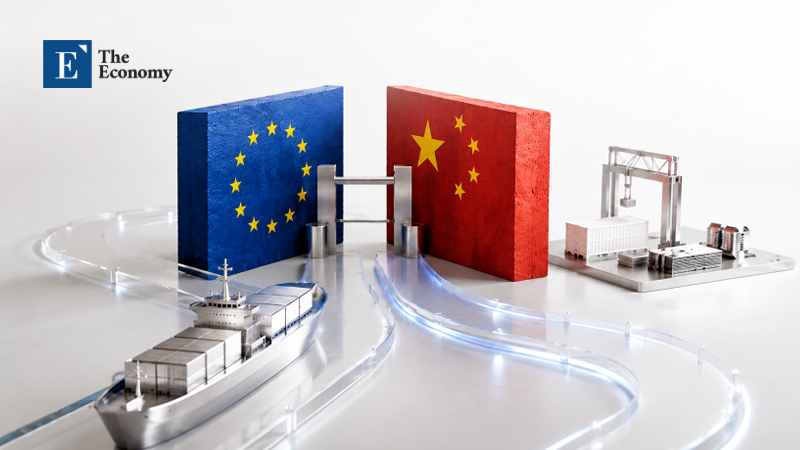
Trade relations with China are expected to emerge as a central agenda item at the European Union (EU) summit. As a widening trade imbalance deepens tensions between the two sides, international attention is turning to the EU's next steps. China has recently made some concessions amid the heightened trade tensions, including agreeing to limit hybrid vehicle exports. However, weak domestic demand and high barriers to alternative export markets suggest that reducing its dependence on Europe in the short term will be difficult.
Read More
Concern over national security threats is growing in the UK. As attempted sabotage and cyberattacks backed by the governments and intelligence agencies of hostile states such as Russia and Iran increase, advances in artificial intelligence (AI) are accelerating cyberattacks and expanding their reach, heightening concerns about the defensive capabilities of the British government and businesses. Experts say minimizing these AI-driven threats requires moving beyond security systems centered on conventional firewalls and antivirus software to establish an environment capable of detecting and responding to anomalous behavior in real time.
Read More
The European Union’s (EU) plan to achieve semiconductor supply chain self-sufficiency is faltering. Despite offering substantial subsidies to expand semiconductor production facilities within the bloc, investment by global chipmakers has struggled to gain momentum because of constraints specific to the European market, including high production costs and regulatory barriers. Indeed, European investments by major companies such as TSMC, Intel and Nvidia are increasingly focused on upgrading existing production facilities and building research and development (R&D) capabilities rather than constructing cutting-edge fabrication plants.
Read More
France has been engulfed by mass protests as citizens take to the streets over conditions in schools and the cost of living. Discontent that began in schools has been joined by anger from labor groups, with arson and looting sweeping major cities. But with national debt reaching 119% of gross domestic product (GDP), the government is struggling even to find the funds to meet protesters’ demands. As protests over economic hardship continue elsewhere in Europe, where energy costs and military spending have risen since the war in Ukraine, governments face the difficult task of cutting spending despite public anger.
Read More
US President Donald Trump’s administration has raised the possibility of strong retaliation against the European Union (EU). As the EU seeks to reduce its dependence on US satellite communications providers and give companies within the bloc priority in allocating spectrum rights, Washington appears to view the move as a discriminatory restriction on market access for US companies and has signaled potential countermeasures. The dispute extends beyond spectrum allocation, affecting policies to foster the space industry, investment regulations and related industries more broadly.
Read More
Venezuela is accelerating efforts to attract foreign capital by focusing on rebuilding its oil and gas industry. Greater management autonomy for foreign companies, followed by improved trading conditions after the easing of U.S. sanctions, has prompted companies from the United States, Europe and the Middle East to invest and expand their operations. Exports are also rising as the war in Iran disrupts Middle Eastern crude supplies, helping Venezuela secure development funding. However, high inflation, power shortages and aging production facilities are hampering economic recovery, meaning it will likely take considerable time to translate oil revenue into industrial reconstruction and job growth.
Read More
Ukrainian President Volodymyr Zelensky warned that large numbers of Ukrainians could flee to Europe if Russia wins the war. With European countries already bearing the financial and social burdens of hosting millions of Ukrainian refugees, he highlighted the possibility of further arrivals to urge expanded Western support. Ukraine currently lacks the funds and weapons needed to wage war next year, while Russia’s large-scale missile and drone strikes are weakening its ability to sustain the conflict.
Read More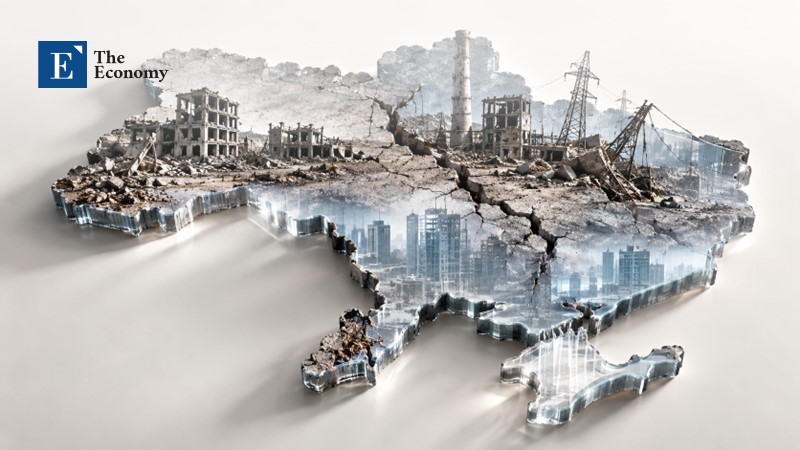
Russian hardliners welcomed U.S. President Donald Trump's public clash with Ukrainian President Volodymyr Zelensky, believing that discord between Washington and Kyiv could create negotiating conditions favorable to Russia. However, the U.S. plan to end the war appears intended to reduce the West's burden of supporting the war and secure economic benefits from frozen assets and energy deals. Making allies pay for weapons purchases and expanding diesel supplies through dealings with Russia are also seen as choices that prioritize U.S. interests in curbing government spending and stabilizing prices.
Read More
Anti-immigration sentiment is intensifying across Europe. Some political leaders in the region have linked the large-scale riots and looting that swept across France to failed immigration policies and are calling for strict border controls. Experts warn, however, that because immigration has helped Europe partially offset its demographic crisis and labor shortages, a prolonged push to reduce immigration could instead exacerbate declines in the economically active population and the depopulation of local communities.
Read More
The United States is considering deploying a massive bomb against Iran's nuclear facilities and energy infrastructure. Having made a reduction in nuclear capabilities a condition for ending the war, Washington appears to be pressuring Iran's leadership by preparing additional airstrikes. Israel has also repeatedly warned of possible military action, identifying both the elimination of the nuclear threat and regime collapse as war objectives. With the war now in its eighth month, the United States and Israel appear to be seeking to weaken the Iranian regime by disabling its nuclear facilities.
Read More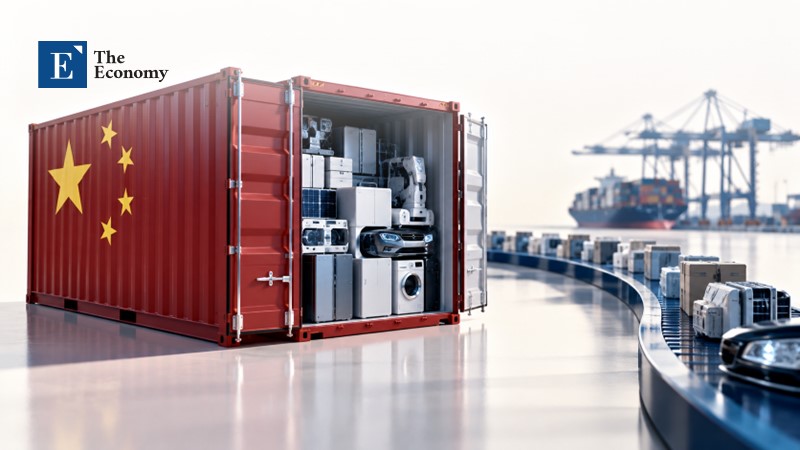
Trade tensions between China and its major trading partners are intensifying as Beijing uses exports to offset weak domestic demand. With inflows of Chinese products threatening domestic industries and jobs, countries have begun coordinating responses to overproduction and have even floated a “second Plaza Accord” to pressure China into allowing the yuan to appreciate. China is preparing to push back using its control over critical-material supply chains, but simultaneous increases in import barriers across major markets would inevitably narrow its scope to sustain growth through exports. There are concerns that if exports also weaken while domestic demand remains sluggish, China could again turn to debt-financed investment stimulus, increasing the risk of Japanese-style prolonged stagnation.
Read More