“SoftBank Also Bets USD 50 Billion”: Global AI Capital Heads to Malaysia as Cost Advantages and Government Support Accelerate Investment

As one of the youngest members of the team, Tyler Hansbrough is a rising star in financial journalism. His fresh perspective and analytical approach bring a modern edge to business reporting. Whether he’s covering stock market trends or dissecting corporate earnings, his sharp insights resonate with the new generation of investors.
Authored On
Modified
SoftBank pursues USD 50 billion in new AI investment in Malaysia
Microsoft, Oracle, AWS and Google also expand infrastructure in Malaysia
Cost savings and ease of hiring underscore investment appeal
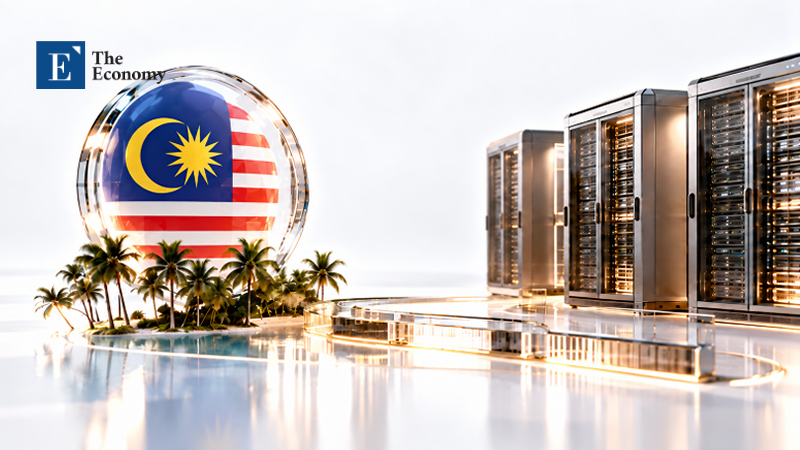
Investment from global technology companies is pouring into Malaysia. Factors lowering barriers to entry for foreign companies include electricity costs below those in neighboring Singapore, a large English-speaking workforce, and favorable conditions for securing large sites. The Malaysian government is also stepping up efforts to attract global investment in artificial intelligence (AI) and data centers by offering corporate tax breaks and tax incentives for skilled professionals, particularly in special economic zones.
SoftBank Sets Its Sights on Malaysia
According to Bloomberg on the 26th (local time), Malaysian Prime Minister Anwar Ibrahim said at an event in Malacca on the 24th that he had discussed a large-scale investment plan with SoftBank Chairman Masayoshi Son by video conference. “Chairman Son said he had selected Kuching in Sarawak and areas of Peninsular Malaysia as investment destinations,” Anwar said. “The investment will total USD 50 billion, making it one of the largest in the region.” He added that the investment would cover “AI, new technologies and data centers,” emphasizing that it would “provide better jobs, particularly for the younger generation.” SoftBank, however, has not issued an official statement on the specific investment amount or business plans.
Earlier this month, SoftBank also signed a framework agreement to develop AI and digital infrastructure with Grab, the operator of Southeast Asia’s largest super app, and Petroleum Sarawak (PETROS), the state-owned energy company of Malaysia’s Sarawak state. The plan is to build AI computing infrastructure and digital platforms using Sarawak, which has abundant hydropower and natural gas resources, as a base, and to develop Malaysia into a major AI infrastructure hub in Southeast Asia. Son, Grab CEO Anthony Tan and PETROS CEO Janin Girie personally signed the agreement, and the three companies agreed to jointly draw up phased infrastructure development plans.
Global Big Tech Investment Pours In
Beyond SoftBank, numerous global technology companies are investing in AI and cloud infrastructure in Malaysia. Microsoft, for example, announced in May 2024 that it would invest USD 2.2 billion over four years to expand Malaysia’s AI and cloud infrastructure, and has steadily expanded its local operations since then. In May last year, it opened Malaysia West, its first cloud region in Malaysia, in the greater Kuala Lumpur area. In November last year, it also unveiled plans to build a second cloud region, Southeast Asia 3, in Johor Bahru.
Oracle also announced in October 2024 that it would invest more than USD 6.5 billion in Malaysia to establish public cloud infrastructure. To meet local demand for AI and cloud services, it plans to offer more than 150 cloud and software services and help companies develop AI models, analyze data and migrate business systems to the cloud. Oracle opened its Malaysia West 2 cloud region in Kulai, Johor, in February and has begun providing services.
Funding Also Flows In from AWS and Google
Amazon Web Services (AWS) opened its first cloud region in Malaysia, the AWS Asia Pacific (Malaysia) Region, in August 2024 and began providing local services. Major customers include Malaysian state-owned energy company Petronas, stock exchange Bursa Malaysia and telecommunications company CelcomDigi. Expecting substantial economic benefits from its long-term investment, AWS plans to invest a total of USD 6.2 billion through 2038 in the region’s construction, operations and related activities.
Google announced in May 2024 that it would invest USD 2 billion in Malaysia to build a local data center and Google Cloud region. The data center will support existing digital services such as Google Search, Maps and Workspace, while the cloud region will provide local businesses and public institutions with AI model development, data analytics and cloud computing services. In August, Google subsequently said construction of the data center was proceeding as planned and that it expected operations to begin within the following nine months.
Table 1. Global Technology Companies’ Investments in Malaysia
| Company | Announcement Date | Key Details |
|---|---|---|
| SoftBank | October 2026 | Discussed a USD 50 billion investment plan for Sarawak and Peninsular Malaysia; signed a framework agreement with Grab and PETROS to develop AI and digital infrastructure in Sarawak |
| Microsoft | May 2024 | Investing USD 2.2 billion over four years to expand AI and cloud infrastructure and the related ecosystem |
| May and November 2025 | Launched its first cloud region in the greater Kuala Lumpur area·Announced plans to build a second region in Johor Bahru | |
| Oracle | October 2024 | Announced plans to invest more than USD 6.5 billion in AI and public cloud infrastructure |
| February 2026 | Launched the Malaysia West 2 cloud region in Kulai, Johor | |
| AWS | August 2024 | Opened an AWS cloud region; plans to invest USD 6.2 billion in related infrastructure through 2038 |
| May 2024 | Data center in Selangor·Investing USD 2 billion to build a Google Cloud region | |
| August 2026 | Confirmed progress on data center construction plans |
Malaysia’s Cost Competitiveness
Competitive electricity costs are one reason corporate demand for AI investment is concentrating in Malaysia. According to energy consultancy Wood Mackenzie, electricity rates for data centers in Malaysia stood at USD 133 per megawatt-hour (MWh) last year, roughly 25% lower than in neighboring Singapore (USD 178). That gap has persisted recently. Industrial electricity rates calculated by data center market intelligence provider Datacentres.com using data as of June this year show that Johor’s rate was USD 0.130 per kilowatt-hour (kWh), 32% lower than Singapore’s USD 0.192.
Favorable conditions for securing land are another attraction. In its Global Data Center Market Comparison report published last year, global real estate consultancy Cushman & Wakefield identified Johor as having the best land availability among major data center markets worldwide, based on the area of land transacted in 2024. The relative ease of securing large sites is seen as advantageous for expanding data centers in phases or building dedicated substations and cooling facilities alongside them. Land prices are also relatively low. Transaction data from Malaysia’s National Property Information Centre (NAPIC) show that the average transaction price for industrial land in Johor last year was MYR 86 per square foot. Market estimates put transaction prices for data center sites equipped with infrastructure such as power grid connections and water supply at MYR 120–160 per square foot.
Low Barriers to Hiring Local Talent
A large English-speaking workforce is another factor lowering barriers to entry for foreign companies. According to the English Proficiency Index (EF EPI) published last year by global education company Education First (EF), Malaysia ranked 24th among the 123 countries and territories surveyed. Its score of 581 was well above the global average of 488, and it ranked highest among the Asian countries and territories surveyed. English proficiency among information technology (IT) workers was particularly strong, at 590, exceeding Malaysia’s overall average. This makes tasks such as writing technical documentation in English and communicating with overseas headquarters and business partners relatively straightforward.
Government policy support is also underpinning investment demand. Malaysia and Singapore signed an agreement in January last year to establish the Johor–Singapore Special Economic Zone (JS-SEZ), launching efforts to attract investment focused on advanced manufacturing and digital industries. Support measures announced at the time by Malaysia’s Ministry of Finance included a special corporate tax rate of 5% for up to 15 years for eligible companies making new investments in designated sectors within the zone, including AI and quantum computing supply chains. This is a substantial tax incentive, given Malaysia’s standard corporate tax rate of 24%. Eligible skilled professionals working in the special economic zone will also receive a special income tax rate of 15% for 10 years.
As one of the youngest members of the team, Tyler Hansbrough is a rising star in financial journalism. His fresh perspective and analytical approach bring a modern edge to business reporting. Whether he’s covering stock market trends or dissecting corporate earnings, his sharp insights resonate with the new generation of investors.
- Previous “From a Joint Defense Agreement to Security Talks with Iran”: Saudi Arabia, Türkiye and Pakistan Strengthen Regional Security Cooperation Amid Iran War and Houthi Offensive
- Next Growing Confident in Its Technology, China Tightens Controls on Overseas Technology Transfers and the Movement of Key Personnel
Similar Post