All Policy News
All News
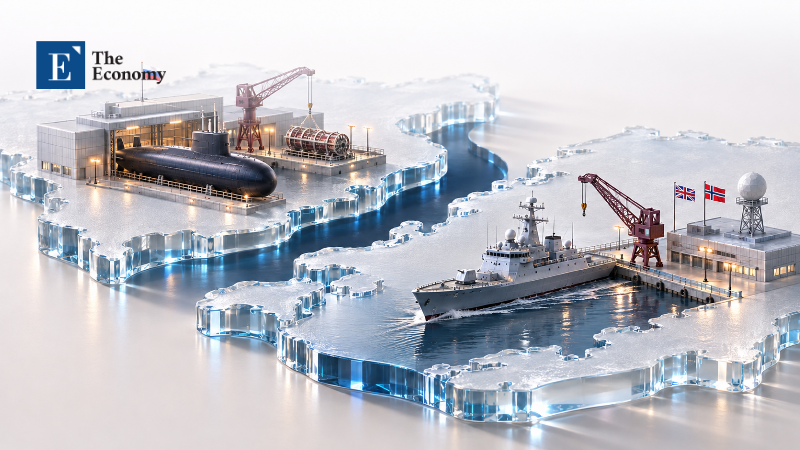
Britain and other members of the North Atlantic Treaty Organization (NATO) are rushing to expand undersea surveillance networks and joint operations in response to Russia’s growing submarine capabilities. Britain plans to build a North Atlantic surveillance network combining uncrewed equipment, sensors and artificial intelligence (AI), while sharing ship operations and logistics systems with allies including Norway. Canada, which faces Russia across the Arctic Ocean, has also moved to acquire underwater detection equipment and establish northern operational support hubs. However, available ships and maintenance capacity remain insufficient for expanding surveillance and patrol missions, while constraints on securing vessels and personnel to repair damaged undersea infrastructure are adding to the burden.
Read More
Government pursues massive funding for semiconductor and AI development
Talent development lags behind investment, raising concerns over project delays
Strengthening exist
 Read More
The European Union (EU) is tightening regulation of digital platforms and e-commerce companies. Having targeted large platforms’ market dominance and the circulation of illegal content and goods through the existing Digital Markets Act (DMA) and Digital Services Act (DSA), it is now seeking to broaden oversight to consumer transaction practices more generally through the Digital Fairness Act (DFA). Meanwhile, market participants warn that, with numerous EU-level digital regulations already operating in parallel, adding similar obligations could increase legal uncertainty and compliance burdens, creating further confusion for businesses.
Read More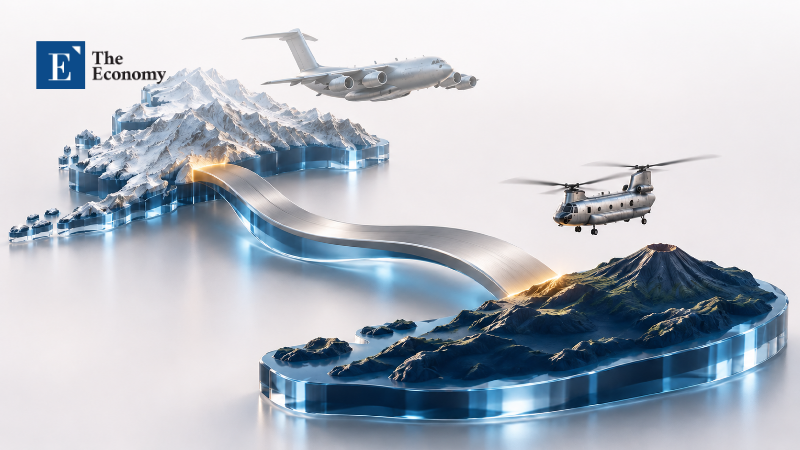
The U.S. Army is continuing exercises that deploy troops from Alaska across the Pacific and send them into combat alongside local forces. The 11th Airborne Division’s recent nonstop flight of approximately 4,800 km, followed by a parachute drop into Hawaii to secure key positions, was part of training linking long-distance movement with ground combat. In South Korea, Japan, India and Indonesia, troops coordinated with local aviation and armored forces to review operational procedures across terrain ranging from mountains to jungles. As Chinese and Russian joint military activities continue in the waters and airspace around Alaska, the U.S. military is reorganizing its forces stationed there and strengthening command and supply systems to support Arctic defense and long-range deployments to the Indo-Pacific.
Read More
The German military has decided to restrict Chinese-made vehicles equipped with advanced sensors from entering military facilities, amid concerns that onboard cameras, radar, microphones and communications modules could collect and transmit sensitive information from inside the facilities. Similar restrictions are rapidly spreading in other major countries, including the United States, the United Kingdom and Poland. As numerous security investigations and experiments confirm the potential for Chinese-made connected cars to transmit data externally and allow remote access, countries are steadily raising their guard.
Read More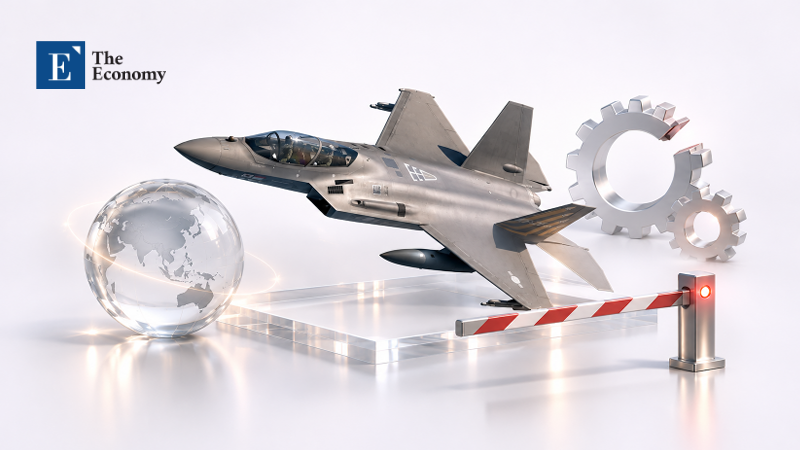
As Korea Aerospace Industries’ (KAI) domestically developed KF-21 Boramae fighter enters full-scale production and deployment, doubts about its actual competitiveness persist. Contrary to initial market expectations, its price advantage is limited, while dependence on foreign engines and key components remains substantial. Against this backdrop, cooperation with former joint development partner Indonesia has been sharply scaled back, and efforts to penetrate Western markets, including Europe, where countries are increasing the share of weapons produced and procured within the region, are also expected to face difficulties.
Read More
The Iranian government has said it could reopen the Strait of Hormuz within a short period if its demands are met. As the United States and Iran continue negotiations mediated by Qatar, hopes for an end to the war appear to be rising again, with both sides prioritizing diplomatic solutions over further military operations. International oil prices have consequently begun to decline noticeably, while China and regional countries including Oman and Saudi Arabia are also stepping in as mediators to help ease tensions in the Middle East.
Read More
With Democrats winning control of both the Senate and the House in the US midterm elections, analysts say the contest between the United States and China for artificial intelligence (AI) supremacy could also shift. If Democrats tighten regulations on AI model development and data centers, US infrastructure investment could slow somewhat, giving China an opportunity to catch up. Some observers, however, counter that Democratic-led policy changes would not necessarily benefit China. They point to the strong possibility that Democrats will tighten controls on Chinese companies’ access to advanced US-made semiconductors and computing resources at overseas data centers, as well as the United States’ continued lead over China in the performance and profitability of advanced AI models.
Read More
Voters in the U.S. state of California have rejected a referendum to introduce a so-called “billionaire tax.” The result followed an opposition campaign bankrolled by Silicon Valley business leaders, with even some Democratic politicians pushing back over concerns about wealthy residents leaving and the tax base weakening. Debates over such tax increases on the wealthy are rapidly spreading beyond the United States to European countries, including Germany, France, Italy and Norway, that are considering or already implementing wealth taxes.
Read More
U.S. Secretary of State Marco Rubio said large-scale military operations against Iran are not immediately necessary, judging that existing economic sanctions and a naval blockade are already exerting substantial pressure. Indeed, Iran’s fiscal and foreign-exchange conditions have been deteriorating rapidly since the war began, amid a plunging rial, soaring prices and a halt in crude oil exports. Some observers even suggest that prolonged pressure could turn economic hardship into public disaffection and conflicts within the leadership, shaking the very foundations of the regime’s rule.
Read More
China has further postponed the implementation of its rare earth export controls, but analysts say the decision is merely a stopgap that delays supply chain instability. Easing US-China trade tensions have somewhat calmed near-term supply concerns, yet building a self-sufficient industrial ecosystem remains a key challenge for Europe and other regions heavily dependent on Chinese rare earths. The European Union (EU) and major member states have recently been trying to establish alternative supply chains by developing mines, expanding refining and recycling facilities, and investing in overseas resources. However, structural constraints—including high production costs, complex permitting procedures and opaque pricing systems—are making tangible results difficult to achieve.
Read More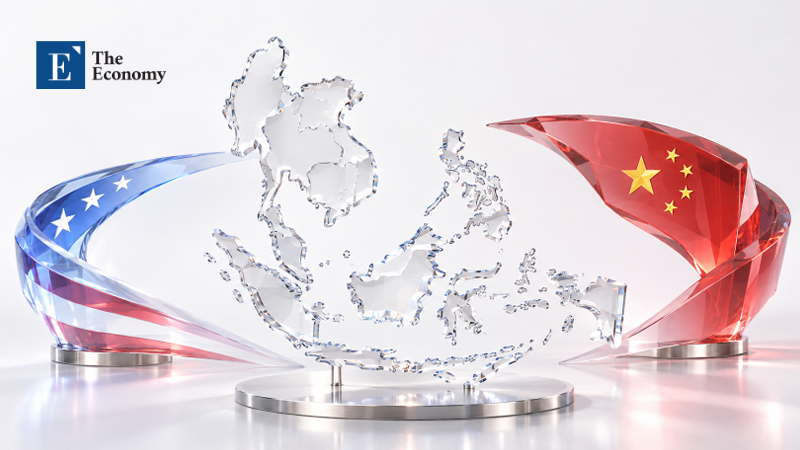
Singapore, long a launchpad for Chinese companies expanding overseas, is facing direct pressure from the U.S.-China rivalry for technological supremacy. Amid mounting allegations that Chinese companies have secured advanced semiconductors and artificial intelligence (AI) computing resources through Southeast Asia, the United States has tightened regulation and scrutiny of the region’s data centers and semiconductor supply chains. Market observers expect Singapore and other Southeast Asian countries to face demands for clearer strategic choices, particularly in advanced technology.
Read More
Criticism is mounting that U.S. President Donald Trump’s administration is offering terms overwhelmingly favorable to Russia in negotiations to end the war in Ukraine. A peace proposal involving sanctions relief for Russia and Ukrainian concessions on territory and troop strength has drawn opposition even in the U.S. Congress, while negotiations led by the president’s son-in-law and a close aide have exposed inadequate internal coordination and procedural shortcomings. In particular, Washington appears to be deepening its allies’ distrust by demanding that Europe shoulder postwar security burdens without securing its participation in the talks. Ahead of a U.S.-China-Russia summit, concerns are also emerging that the security of Ukraine and Europe could become entangled in deals among major powers that exclude the countries directly affected.
Read More
Military tensions between the North Atlantic Treaty Organization (NATO) and Russia are escalating rapidly. As Russia expands its naval and submarine operations in the Baltic Sea and North Atlantic and even raises the possibility of using nuclear weapons against NATO members, countries including Estonia, the United Kingdom and Canada are strengthening their military readiness in response to Russian threats. Some international observers, however, argue that Europe's current diplomatic and economic circumstances will limit NATO members' ability to effectively deter Russian military action.
Read More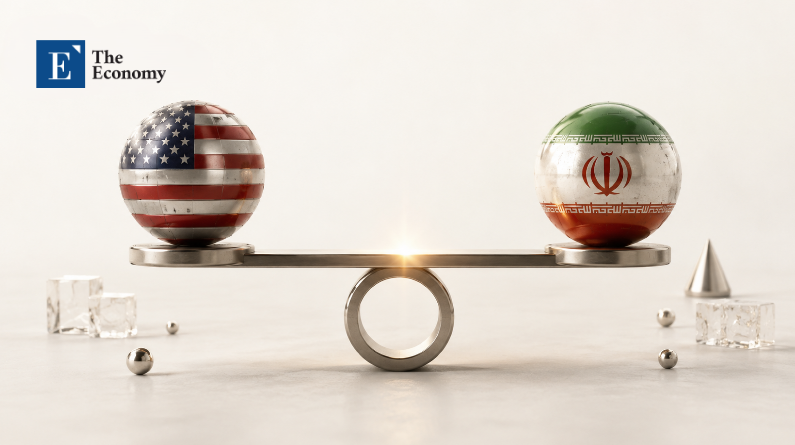
Military uncertainty surrounding the United States and Iran is growing. As the prospect of Democrats regaining a congressional majority gains attention ahead of the U.S. midterm elections, observers have begun suggesting that political checks on future military operations against Iran could intensify. Others, however, argue that a shift in control of Congress would not sharply reduce Washington’s capacity to conduct military operations in the short term. That is because the Donald Trump administration has already pushed to secure separate defense funding and additional appropriations while accelerating efforts to expand weapons production capacity with allies such as Japan.
Read More
Russian President Vladimir Putin said Russia was prepared for war with Europe but did not want an actual military confrontation. He warned that there would be no winners if tensions between Russia and Europe escalated. International observers see the risks arising from the prolonged war in Ukraine as a factor behind his remarks. With Russia facing a growing burden in sustaining the war, including defense spending, analysts say Putin is keeping the door open to negotiations while maintaining a hard-line message toward Europe in search of a breakthrough.
Read More
The United States has signaled a change in how it supports the security of its Middle Eastern allies. It plans to end annual military aid to Israel and encourage countries in the region to strengthen their defenses by purchasing U.S. weapons with their own funds. The move is seen as an effort to share the burden of Middle East defense with local countries while securing the forces and funding the United States needs to counter China and secure Arctic shipping routes and resources. For the United States, now a net energy exporter, declining dependence on Middle Eastern crude oil also provides grounds for narrowing the scope of military intervention.
Read More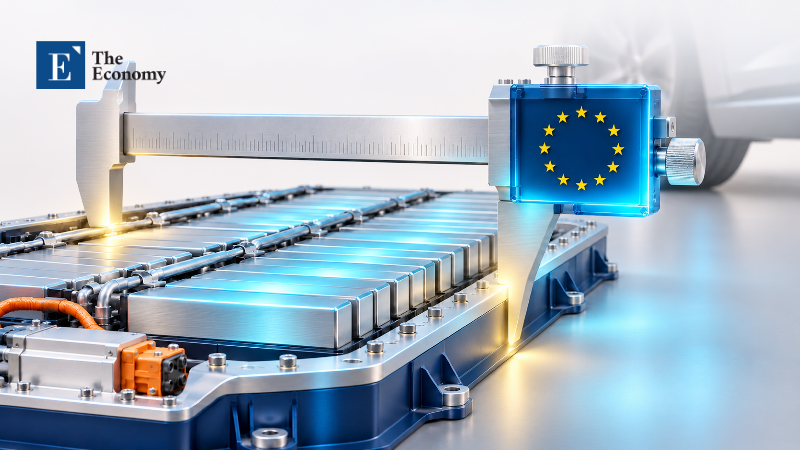
Europe's battery industry is pushing back against tighter European Union (EU) battery regulations. Major associations have joined forces over concerns that revised hazardous-substance labeling standards will increase the burden on businesses, while warnings have also emerged that production capacity cannot keep pace with regulatory requirements under policies favoring EU-made products. Northvolt's bankruptcy and ACC's cancellation of factory projects have disrupted plans to increase European battery supplies. Meanwhile, Chinese companies are expanding their production footprint in Europe and partnering with local automakers, increasingly gaining control over the battery supply chain.
Read More
Changes in the U.S. political landscape have emerged as a new variable in global liquefied natural gas (LNG) supply chains. With Democrats winning majorities in both the Senate and the House of Representatives in the U.S. midterm elections, large-scale U.S. projects to expand LNG production and exports, including Alaska LNG development, face a growing possibility of being stalled. Against this backdrop, markets are focusing on the role of alternative suppliers, including Canada, which could benefit if U.S. supply expansion slows, and Qatar, which is pursuing major capacity expansions despite a sharp decline in exports caused by the Iran war.
Read More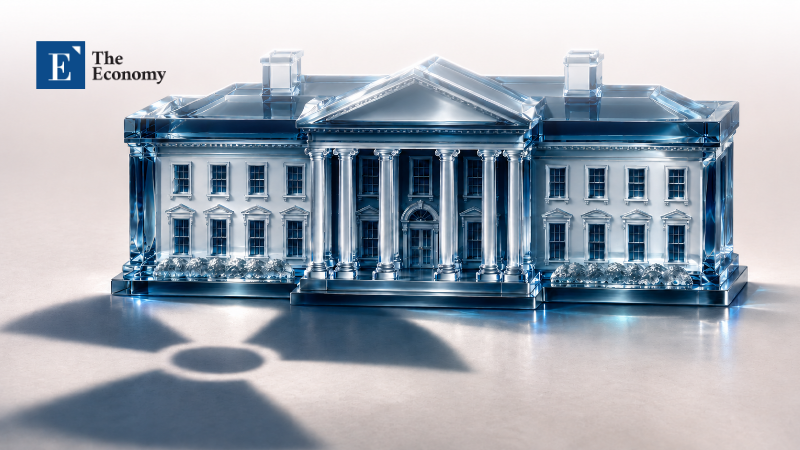
U.S. intelligence agencies have picked up intelligence that Iran, under pressure from U.S. military strikes and an economic blockade, is planning to detonate a radioactive dirty bomb or chemical weapons in Washington, D.C. The targets discussed were senior officials in the Donald Trump administration. Having demanded Iran's unconditional surrender at the outset of the war, the United States now finds itself having to prepare for threats of retaliation against its homeland in the conflict's ninth month. With inspections of nuclear facilities blocked since the airstrikes and the whereabouts of uranium unclear, Iran maintains that it will only attend talks to end the war if economic sanctions and the naval blockade are lifted first.
Read More