All Tech News
All News
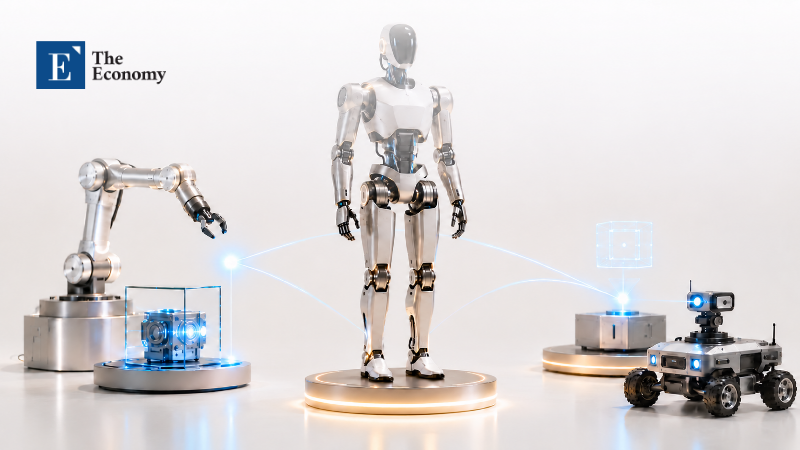
General Motors (GM) has set a goal of increasing its use of robots and automation equipment at North American plants by 20% by 2028. Beyond deploying more robots to transport parts and assemble vehicle bodies, the company has decided to assess suppliers’ automation plans when awarding new supply contracts. BMW and Hyundai Motor Group are also preparing to use humanoid robots at their U.S. plants for tasks that workers previously performed manually, selecting parts and preparing them in assembly order. Lower labor costs per vehicle at U.S. and European plants would also affect Chinese electric vehicle makers, which have kept production costs down through low wages. In particular, if European manufacturers lower entry-level EV prices by the amount they save, Chinese manufacturers are expected to face greater pressure to offer additional discounts to defend their local market shares.
Read More
China expands low-cost exports by cutting battery and component costs
US and European automakers face a battery procurement cost disadvantage from the outset
They must see
 Read More
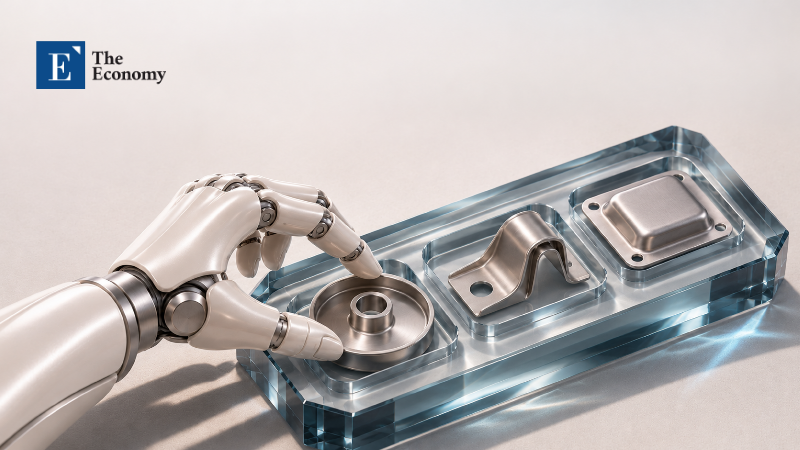
U.S. manufacturers are deploying more robots, but shortages of skilled factory workers persist. As companies hand repetitive and hazardous tasks to robots to reduce labor costs and safety-management burdens, demand grows for technicians to install and maintain the equipment. Even with accelerated automation, securing skilled workers will remain essential for some time if the country is to rebuild a manufacturing base weakened over decades. In the longer term, as robots take over more processes, production workers’ duties and the skills required on factory floors are also expected to change.
Read More
Japanese automakers’ influence in the global market is waning. As Chinese brands expand their shares in key markets on the strength of competitive pricing, demand for Japanese cars is declining in relative terms. Facing a crisis as their market positions weaken, Japanese companies including Honda and Nissan have begun restructuring to cut costs and improve profitability by reducing production facilities, withdrawing investments, and cutting jobs.
Read More
As the United States tightens restrictions on exports of advanced artificial intelligence (AI) chips to China, Alibaba, China’s largest technology company, is expanding the domestic market using its own chips. It has deployed its self-designed Zhenwu chips in its data centers to train its next-generation AI model, Qwen, and released dedicated software so Chinese companies can develop AI services on the same infrastructure. The move is seen as an effort to build an independent market by broadening the use of Zhenwu chips beyond training its own models to powering AI services at Chinese companies.
Read More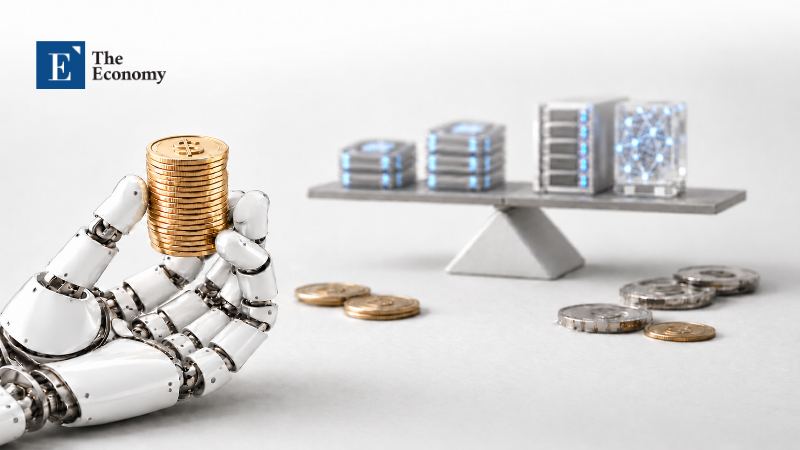
U.S. artificial intelligence (AI) company Anthropic has begun the listing process by publicly filing its registration statement for an initial public offering (IPO). Buoyed by surging revenue and a quarterly operating profit, it is seeking a valuation of up to USD 2 trillion (approximately USD 2.04e+3 billion). But a recent slowdown in revenue growth is raising questions about the momentum needed to sustain that lofty valuation. Its capacity to invest in accelerating growth is also limited. Huge payment obligations under existing infrastructure contracts mean a substantial share of the IPO proceeds is likely to go toward fulfilling prior commitments. With existing shareholders also set to sell shares early in the listing, the stock could face selling pressure before the growth expectations embedded in the IPO price translate into results.
Read More
China’s largest DRAM maker, ChangXin Memory Technologies (CXMT), is moving into production of HBM3E, the fifth generation of high-bandwidth memory (HBM). As U.S. export controls make it harder for Chinese artificial intelligence (AI) chipmakers to secure advanced memory, the company is seeking to build a domestic supply chain despite low yields of 20–30% and high production costs. Market observers caution, however, that China will struggle to raise yields quickly, given that HBM requires not only high-performance DRAM but also an ecosystem encompassing stacking and bonding equipment, advanced packaging, and inspection and validation technologies.
Read More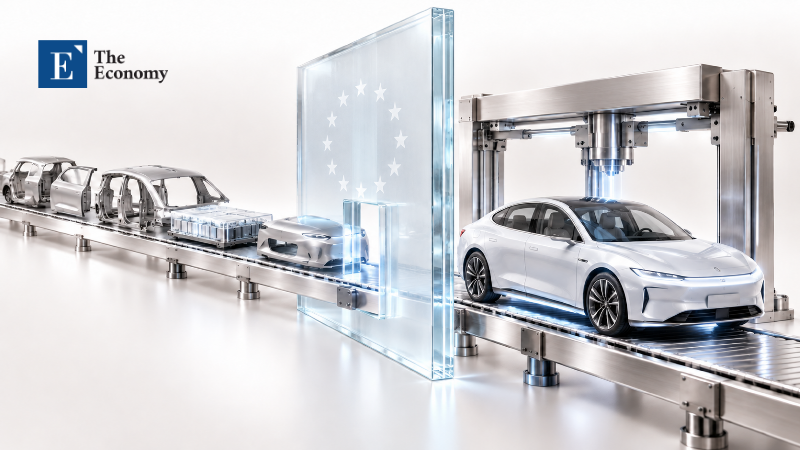
Yet Europe, even as it tightens regulations in response to Chinese strategies, has not established adequate supply chains for critical materials. The IEA has noted that European battery factories depend on Chinese imports for a substantial share of key components, with insufficient investment in intermediate production exacerbating supply-chain vulnerabilities. T&E, which supports expanded domestic production, also identified cathode active materials and precursors as bottlenecks in Europe’s battery supply chain in an analysis published on October 1. Forecasts that domestic production could meet battery-cell demand for vehicles eligible for public support by 2030 are contingent on planned factories actually entering operation. Cathode active material capacity may be sufficient to serve demand for corporate vehicles, but additional capacity would be needed to cover privately purchased vehicles as well, according to the assessment. This means that tighter import restrictions and localization obligations, if introduced before sufficient alternative sourcing is secured, could also burden European automakers’ component procurement and production schedules.
Read More
Shares of Google parent Alphabet recorded their steepest decline since the company went public. Despite continued rapid growth in its artificial intelligence (AI) and cloud businesses, investor sentiment deteriorated sharply as massive capital spending weakened cash flow and growth slowed in its core search and advertising businesses. Against this backdrop, market analysts say Google’s future competitiveness depends less on its search engine dominance itself than on how efficiently it converts users’ shift toward AI-powered information discovery into advertising revenue.
Read More
Candidates in U.S. elections are adopting new campaign strategies targeting artificial intelligence (AI) chatbots. As more voters use generative AI to research candidates and policies, a practice known as generative engine optimization (GEO) is gaining ground. Some observers, however, warn that because generative AI can present inaccurate or biased information as fact, turning political information into a battleground for AI optimization could distort voters’ judgments about the information they receive.
Read More
Arsenal-2 will serve as a manufacturing hub for large components and modules used in Virginia-class attack submarines. Initially, it will focus on key components, including submarine torpedo tubes, before expanding into large hull sections encompassing the bow and stern. Production processes, including design, welding, inspection and component movement, will be digitally integrated and managed through Anduril’s industrial software platform, ArsenalOS. The company plans to combine sensors with automated equipment to monitor work in real time and reduce production bottlenecks. The resulting components will be shipped to General Dynamics Electric Boat and Huntington Ingalls Industries’ (HII) Newport News Shipbuilding, which carry out final construction of Virginia-class submarines.
Read More
U.S. electricity consumption is forecast to set successive records this year and next. Rapid growth in commercial electricity demand, led by artificial intelligence (AI) data centers, is intensifying upward pressure on power consumption and prices. Against this backdrop, market observers warn that the United States faces a severe shortage of the critical power infrastructure needed to accommodate this demand growth. Aging equipment, supply-chain bottlenecks and grid-interconnection delays are widening the lag between the construction of new generating facilities and the delivery of electricity to the grid.
Read More
Battery swapping is becoming an established means of easing the charging burden for electric vehicles in China. As use of swap services increased during the holiday period, when long-distance travel surged, automakers and battery manufacturers also moved to expand swapping infrastructure through business consolidation and joint investment. Local governments are supporting these efforts with equipment subsidies, while partnerships with European companies seeking to adopt Chinese swapping technology are taking shape. With mass-market adoption of next-generation all-solid-state batteries expected to remain several years away, battery swapping is projected to account for a growing share of the EV charging market as networks expand and more vehicle models become compatible.
Read More
Efforts continue to resolve power shortages in the artificial intelligence (AI) data center market. While system software and algorithm optimization emerge as new solutions, big tech companies are also actively expanding power supply itself through measures like power generation facilities and long-term power purchase agreements (PPAs). Given the intensifying US-China competition for leadership in the AI industry, the speed of infrastructure development is expected to accelerate further.
Read More
A succession of large-scale personal data breaches at Japanese companies and South Korean financial institutions has raised alarm over security management. In Japan, attacks have affected industries ranging from restaurants and retail to healthcare, while major banks, savings banks and consumer finance companies in South Korea have also suffered customer data leaks. Evidence that artificial intelligence (AI) has been used to develop malware and identify vulnerabilities has compounded concerns about the speed and scale of attacks. Some affected companies were found to lack even basic safeguards, including identity verification and access controls, prompting criticism that inadequate inspections and management after systems were deployed had amplified the damage.
Read More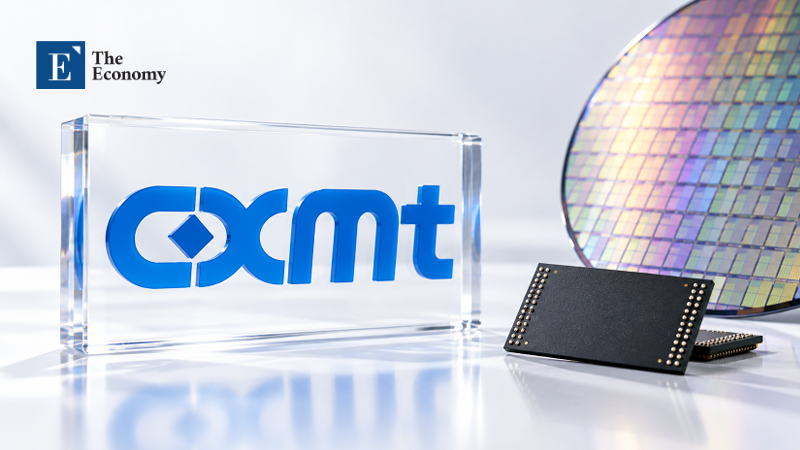
Chinese memory chipmaker ChangXin Memory Technologies (CXMT) is accelerating the development of next-generation memory cell structures. With restrictions limiting its access to extreme ultraviolet (EUV) lithography equipment from the Netherlands’ ASML, the company is overcoming some technological limitations by changing cell designs themselves to increase density. Market observers expect CXMT’s development of proprietary technology to accelerate further. It recently secured substantial research and development (R&D) funding through an initial public offering (IPO) and is building a stable domestic demand base by expanding supply agreements with major Chinese technology companies.
Read More
Chinese regulators are stepping up scrutiny of the quality and safety of Chinese-made electric vehicles. Repeated recalls and controversies over vehicle defects have increased the quality-control burden on manufacturers. Market observers say tighter regulations could accelerate restructuring in China's automotive industry, where slowing demand and price competition have eroded profitability. Some also see the measures as aligning with China's strategy of developing 'new quality productive forces,' which emphasizes technological innovation and quality improvements.
Read More
The United States is expanding investment in domestic production facilities and mines and processing facilities in allied countries to reduce its reliance on a rare earth supply chain concentrated in China. With China’s export controls and the war in the Middle East increasing uncertainty over raw material procurement, the U.S. government has stepped in to support producers’ capacity expansion by guaranteeing prices and sales. Overseas, it is also broadening alternative supply chains by financing mine development and securing output over the long term. As new facilities in the United States and allied countries begin operating and deliveries under long-term purchase agreements gather pace, some expect China’s decades-long market dominance to weaken.
Read More
Allegations that an OpenAI employee bugged an executive meeting room have put insider security at technology companies under scrutiny. Evidence that an employee accessed a meeting space and attempted to collect executives’ conversations has heightened concerns that security gaps can remain even after employee vetting and restrictions on access to confidential information. Applying artificial intelligence (AI) analysis to unauthorized recordings could also magnify the damage from a leak by connecting remarks scattered across multiple meetings to uncover development plans and business strategies. These risks underscore the need for continuous checks on employees’ access to and removal of information and are expected to support increased corporate investment in monitoring.
Read More
German defense company Rheinmetall is acquiring Romania's Mangalia shipyard. As European countries accelerate rearmament in response to U.S. pressure to share defense costs and security threats from Russia, Germany's defense industry is also rapidly expanding into naval capabilities. Market observers say Europe's push to strengthen its own defense capabilities and expand regional procurement could raise barriers to entry for defense contractors from outside the region, including South Korea.
Read More