All Financial News
All News

ECB considers locking up some quantitative easing funds in non-interest-bearing reserves
China’s higher foreign-currency reserve requirement reduces domestic banks’ lendin
 Read More

Binance, the world’s largest cryptocurrency exchange, has suffered the largest hack on record. A North Korea-linked hacking group breached its internal systems and stole a massive amount of cryptocurrency. Binance pledged to fully cover customer assets in response, but heavy withdrawal demand and declines in major cryptocurrency prices have persisted. Market observers say repeated similar incidents at other major exchanges, including Mt. Gox, Coincheck and Bybit, have deepened structural distrust in exchanges’ asset custody and management systems.
Read More
Turmoil is spreading rapidly through Europe’s speculative-grade corporate bond, or junk bond, market. Amid persistently high interest rates and an economic slowdown, selling has intensified among financially vulnerable companies. Losses and position liquidations at hedge funds that have invested in distressed debt are adding to downward pressure on prices across the market. France’s fiscal deficit and public opposition to austerity policies are also cited as factors fueling instability in government bond markets. Concerns are mounting that a fiscal shock originating in France could spread to other heavily indebted eurozone countries, including Italy.
Read More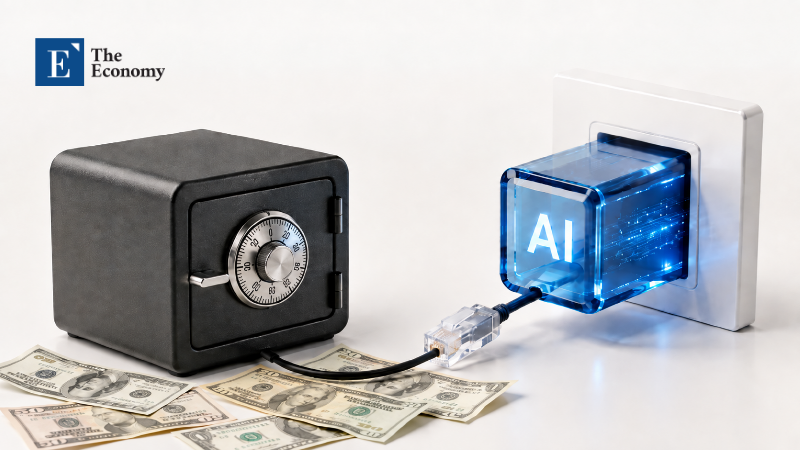
Investors seeking so-called “loss insurance” in artificial intelligence (AI) are rapidly increasing. As shares of major AI companies weaken in tandem and data center construction delays materialize, particularly in the United States, investors are shifting their attention toward credit risk management. With AI infrastructure investment intricately intertwined with private credit, insurance and structured financial products, some market participants are even warning that losses at individual companies could spread into credit risks across financial markets.
Read More
Europe is stepping up exchange-rate and trade pressure on China, judging that an undervalued yuan and persistent overproduction by Chinese companies have boosted the price competitiveness of Chinese goods and squeezed European manufacturing. China, meanwhile, is defending its current exchange-rate policy and remains wary of these Western demands. With a rapid appreciation of the yuan threatening to simultaneously weigh on exporters' profitability, employment and domestic demand, Beijing appears intent on controlling the pace of appreciation while preserving its export growth engine.
Read More
Italy, which has attracted wealthy foreigners with tax breaks, is moving to introduce an “exit tax” on the unrealized gains of wealthy individuals relocating abroad. After successive increases in its flat tax for new arrivals, the country now plans to tax gains on financial assets that have not yet been sold when their owners move their residence overseas.
Read More
Artificial intelligence (AI) company Anthropic is poised to push ahead with a listing this month even if it means accepting a lower valuation. With massive infrastructure spending commitments and its operating results having swung to a loss, the company appears to have an urgent need to raise funds through an IPO. Investors aware of its need for cash are demanding a lower price, and some market forecasts suggest its IPO valuation could fall to USD 1 trillion, half the level initially anticipated. But concerns remain that even a lower-priced listing would struggle to support the shares if service prices keep falling and profitability remains weak. If poor share performance disrupts Anthropic’s additional fundraising and investment spending, it could also undermine earnings expectations for computing resource suppliers, weighing on investment sentiment across the AI industry.
Read More
Wall Street, which had been pouring money into artificial intelligence (AI) investment, is raising lending standards, putting the brakes on data center expansion. Some banks are scrutinizing repayment prospects so closely that they are reluctant to extend new loans even for deals guaranteed by Big Tech companies such as Google. The AI industry, which has increased capital spending while taking on long-term rent and guarantee obligations, urgently needs additional funding, but plunging tech stocks have also worsened conditions for raising money through equity markets. Anthropic, which had planned to finance investment through a large initial public offering (IPO), also faces concerns that falling investor valuations will make it difficult to maintain its target offering price.
Read More
The U.S. Federal Reserve (Fed) has identified the surge in borrowing to fund expanding artificial intelligence (AI) investment as a major risk to financial markets. It warned that major technology companies and data center operators are intertwined through loans, guarantees and equity investments, meaning deteriorating profitability could spread losses to the financial sector. AI-related stocks have already plunged on concerns about tighter AI regulation following the midterm elections, with selling by hedge funds that had invested with borrowed money deepening the declines. Nvidia CEO Jensen Huang’s resignation has added uncertainty over whether investment in and support for customers will continue, heightening anxiety over funding across the AI industry.
Read More
China’s central bank, the People’s Bank of China (PBOC), has unexpectedly raised the reserve requirement ratio for financial institutions’ foreign-currency deposits for the first time in about 5 years. The move aims to curb the yuan’s sharp appreciation and defend export competitiveness, a key pillar of economic growth. Some market analysts, however, argue that allowing a degree of yuan appreciation to boost domestic consumption and accelerate the currency’s internationalization could offer China a viable alternative.
Read More
A succession of cyberattacks is disrupting Japanese businesses and fueling concerns about weaker consumer spending, weighing on the economic recovery. Suspended orders and shipments continue to hamper operations, while fears of personal data leaks could also discourage online transactions. Yet companies that rely heavily on outsourcing IT work are struggling to respond because they lack in-house security staff and have been slow to replace aging systems. Although the government is working to expand the security workforce, an aging population, inadequate retraining and limited capacity to train specialists make it difficult to ease staffing shortages on the ground. Companies now face the prospect of pouring money into overdue security investments and talent development while also absorbing business losses incurred in the meantime.
Read More
China’s domestic demand slump is deepening by the day. A combination of a property downturn, job insecurity among young people, and low birth rates and population aging has sharply weakened households’ spending power. Meanwhile, companies, squeezed by cutthroat competition at home, are increasingly relying on overseas markets. Although the Chinese government is seeking to stimulate the economy through massive liquidity injections and investment in advanced manufacturing, market observers warn that a growth strategy centered on capital-intensive industries alone has limited capacity to revive both employment and consumption.
Read More
Warnings have emerged that cooling enthusiasm for artificial intelligence (AI) investment could send the effects of falling technology stocks and shrinking capital spending rippling through the labor market. The concern is that if returns on AI investment fall short of expectations, declining stock prices and a slowing economy could drive a larger increase in unemployment. Although pessimism that an economic slowdown will weaken employment dominates market sentiment, some optimists argue that hiring could actually recover at companies that cut staff in anticipation of automation. They foresee an “AI boomerang”: as work that AI cannot handle piles up and the cost of correcting errors rises, companies may again seek employees familiar with their operations.
Read More
The yen’s weakening trend shows little sign of reversing despite the Japanese government’s large-scale intervention in the foreign exchange market. Although the Bank of Japan (BOJ) continues to raise its policy rate, mounting structural challenges—including massive government debt, low birth rates and population aging, and weakening competitiveness in key industries—are delaying a recovery in investor appetite for yen-denominated assets. This phenomenon, in which concerns over public finances and economic growth weigh on a currency despite high interest rates, is also emerging beyond Japan in major Western economies such as the United States and France.
Read More
Questions have emerged over the sustainability of the semiconductor boom underpinning South Korea’s economy. Memory shortages and surging prices have sent exports and corporate profits soaring, but it remains unclear whether earnings can continue to rise at the same pace. Growing use of long-term supply contracts with price caps has also prompted forecasts that memory price increases will be limited. Combined with the possibility of slowing artificial intelligence (AI) investment and China’s technological advances, these concerns have dampened optimism about a prolonged boom.
Read More
As the war in Iran drags on and inflation fears mount, the U.S. 10-year Treasury yield has broken through 5%, followed by the 30-year mortgage rate crossing the 7% threshold. Buyers struggling to afford interest payments are postponing home purchases, leaving listings to pile up and prompting both homeowners and builders to cut prices to attract buyers. Sluggish transactions are leading to price reductions, but war-driven inflation concerns and the U.S. debt burden are pushing interest rates higher, maintaining pressure on the housing market. In particular, concerns are growing that if peace talks fail to achieve a breakthrough and uncertainty over crude oil supplies persists, high interest rates could suppress buying demand and intensify downward pressure on home prices.
Read More
The US Treasury Department announced that it had imposed a substantial fine on Bank of America (BofA). As scrutiny of money laundering in the US financial sector intensifies, financial institutions that fail to adequately detect and report suspicious transactions are facing a succession of penalties. Similar regulatory trends are increasingly evident in other major countries. In China in particular, authorities are steadily stepping up enforcement and monitoring to prevent capital outflows through underground banks, virtual assets and fraudulent trade transactions.
Read More
Concerns about slowing growth are mounting as China's economy struggles under a property slump and heavy debt burdens. The prolonged property downturn is increasing banks' exposure to bad loans and suppressing household consumption, obstructing a recovery in domestic demand. The government, which must fill the gap in private-sector spending, also faces shrinking fiscal room as its debt grows, leaving it in a dilemma: the more it stimulates the economy, the greater its public debt burden becomes. Market observers warn that China could fall into a prolonged slump like Japan, which spent years adjusting its debt after its property bubble burst.
Read More
The global energy supply chain crisis is dragging on. Rapidly declining crude oil and petroleum product inventories worldwide have weakened the market’s ability to absorb further supply shocks. Middle Eastern oil producers are accelerating efforts to expand supply, but persistent shipping disruptions around the Strait of Hormuz and the Red Sea have limited the recovery in actual exports. The resulting rise in energy prices is spreading across production and transportation costs, increasing inflationary pressures in major Western economies, including the United States and Europe.
Read More
UBS, Switzerland’s largest bank, is considering moving its headquarters abroad to reduce the cost burden of tighter capital requirements. After authorities demanded that UBS, enlarged by its rescue takeover of Credit Suisse, hold more capital, the bank began exploring relocation options, including acquiring a U.S. bank. UBS has been a central pillar of Switzerland’s wealth management industry, providing trading and lending services to local family offices and asset managers. If a headquarters relocation is followed by the departure of key personnel and business functions, Switzerland’s wealth management sector and related industries, including legal and tax services, will inevitably suffer. With Hong Kong and Singapore rapidly attracting wealthy clients’ money, concerns are also growing that a UBS departure could undermine Switzerland’s standing as an international financial hub.
Read More